

For anything automotive.
Diagnostic Equipment, Vehicle Lighting, Technical Education & Consulting
Visit our online store to get the best DIAGNOSTIC TOOLS...GUARANTEED
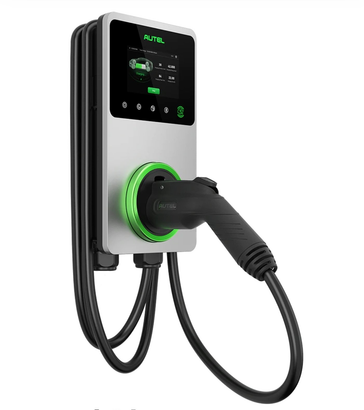
New EV Charging Stations for your repair business, a new profit center!
Allview is the west coast distributer of these new products from Autel EV!
Technician Tip Section - Helpful basic information to get you started with modern diagnostics
A lab scope tells the truth when a scan tool only tells part of the story. If you are looking for the best automotive lab scope training, that usually means you have already seen the limits of code-based diagnosis. You have a driveability problem, an intermittent network fault, a no-start with conflicting data, or a component that tests fine on paper but fails in operation. At that point, scope training is not about collecting another certificate. It is about learning how to make the right call faster.
What the best automotive lab scope training actually teaches
Good scope training does more than explain button functions. It teaches a diagnostic process. That matters because many technicians do not struggle with connecting leads or selecting a time base. They struggle with deciding what they are trying to prove, where to connect, what a normal waveform should look like under load, and how to separate a root cause from a symptom.
The best programs build from that foundation. They start with electrical behavior, not just scope menus. You should leave knowing how voltage, current, resistance, duty cycle, frequency, and signal integrity show up in an operating circuit. Then the course should move into real vehicle systems - ignition, fuel delivery, cam and crank correlation, pressure transducers, charging systems, network communication, and actuator control.
That progression matters in the shop. A technician who only learns scope features often becomes dependent on presets and pattern matching. A technician who understands the system behind the waveform can test unfamiliar vehicles, compare expected behavior to actual behavior, and make decisions when the pattern is not textbook perfect.
Why many technicians still struggle after basic scope classes
A lot of automotive training covers lab scopes at a surface level. The class may show a few known-good captures, explain probe setup, and spend limited time on waveform interpretation. That is enough to create interest, but not enough to build confidence when the vehicle in bay three has multiple faults and no clean answer.
The gap usually comes down to context. A waveform by itself does not fix a car. You need to know the operating strategy of the system, the failure modes that distort the signal, and the test conditions that can create false conclusions. For example, a crank sensor pattern might look acceptable during cranking but break down under heat or vibration. A CAN waveform can look active while still hiding a termination issue, bias fault, or module loading problem.
This is why the best automotive lab scope training uses fault-based examples, not just ideal captures. It should show what bad looks like, what almost-bad looks like, and what normal variation looks like across platforms.
The signs of strong automotive lab scope training
The strongest training is hands-on, vehicle-centered, and built around repeatable testing methods. That sounds obvious, but there is a big difference between watching waveform slides and working through actual diagnostic routines.
A worthwhile course should teach channel setup, trigger use, scaling, cursors, and capture strategy, but those are support skills. The real value is learning where to test, when to use voltage versus current, when to add a pressure transducer, and how to confirm a diagnosis before recommending parts.
Look for training that covers primary and secondary ignition, current ramping, injector control, sensor bias circuits, cam and crank synchronization, starter draw analysis, charging ripple, network diagnostics, and relative compression. If the course only focuses on a narrow group of examples, it may not translate well to daily shop work.
The instructor also matters more than the equipment brand. A talented instructor can teach sound test strategy across platforms because the principles stay the same even when software layouts change. The best trainers are people who have diagnosed real faults, trained working technicians, and understand the pressure of flat-rate time, comeback risk, and tool investment.
Best automotive lab scope training for shop results
The best automotive lab scope training is the training that improves decisions in the bay, not the training with the longest feature list. For a shop owner or lead technician, that means asking a practical question: will this course help the team isolate faults faster, reduce unnecessary parts replacement, and raise first-time fix rates?
A good scope class should pay for itself in prevented mistakes alone. One incorrect ECM, one unnecessary fuel pump, or one misdiagnosed timing issue can cost more than quality training. Shops that treat scope education as a production tool rather than an academic exercise usually see the benefit sooner.
That also changes what “best” means. For a newer technician, the best course may be one that slows down and builds confidence with core electrical testing. For an experienced diagnostician, the better fit may be advanced waveform interpretation, pressure transducer analysis, or CAN network troubleshooting. It depends on the current skill level of the team and the type of vehicles the shop sees most often.
Online versus hands-on training
There is a place for both. Online training is efficient for theory, waveform review, and repeated study. It works well when a technician needs to revisit signal types, circuit behavior, or case studies after hours or between jobs. It is also useful for multi-location shops trying to give several employees the same baseline instruction.
Hands-on training is where skill gets real. Lead placement, noise recognition, trigger setup, loading a circuit correctly, and capturing intermittent events are easier to learn when an instructor can see what the student is doing. The same goes for pressure transducer setup, current clamp use, and network testing on live vehicles.
The strongest option is usually a blended model. Learn the theory in a structured format, then reinforce it in live class with guided diagnostics. That combination shortens the gap between understanding and application.
What to ask before enrolling in lab scope training
Before committing time and money, ask what the course is designed to produce. If the answer is mostly about features, software screens, or broad introductions, keep looking. A serious course should be able to explain the diagnostic outcomes students can expect.
Ask whether the training includes real vehicle case studies, whether it covers known-good versus failed waveforms, and whether students practice building a test plan. Ask if the content addresses modern shop problems such as GDI issues, low-amperage faults, module communication faults, and correlation testing. If you work on diesel, European, fleet, or emissions-related platforms, make sure those applications are represented.
It is also worth asking how current the material is. Vehicle systems continue to change, and waveform training has to keep up with newer control strategies, changing sensor designs, and network architecture.
The role of support after the class
One-day inspiration is easy. Long-term improvement is harder. The best training does not end when the class ends. Technicians need a way to reinforce what they learned when they get back to the shop and face a difficult vehicle without an instructor nearby.
That is where support matters. Access to follow-up guidance, updated course material, advanced classes, and a trainer who understands both equipment and diagnostics makes a difference. Shops are more likely to use their scopes consistently when the learning does not stop at the door.
This is also where a company like Allview Services stands out naturally. When training, equipment knowledge, and real diagnostic experience come from the same source, the instruction tends to stay practical. The goal is not to impress technicians with theory alone. The goal is to help them test correctly, interpret accurately, and make the repair with confidence.
Training is only valuable if it changes technician behavior
The hardest part of scope adoption is not buying the tool. It is changing habits. Many shops own capable scopes that spend most of the week in a drawer because the team defaults to code checks, parts swapping, or static meter tests. Better training changes that pattern by making scope use feel normal, fast, and worth the effort.
That only happens when the course teaches a repeatable approach. What is the complaint? What signal will prove or eliminate a suspect? What should the waveform look like under these conditions? What is the next test if the pattern is inconclusive? That structure is what builds confidence under pressure.
If you are evaluating the best automotive lab scope training, focus less on marketing claims and more on whether the program reflects real diagnostic work. Strong training should improve your test selection, sharpen your interpretation, and reduce wasted time in the bay. When that happens, the scope stops being a specialty tool and becomes part of how your shop diagnoses vehicles every day.
The right course will not just teach you how to capture waveforms. It will help you trust what the waveform is telling you when the vehicle, the scan data, and the service information do not all agree.
Course designed by Ed Schaplow copy right Allview email Ed for our class list and mor information on custom classes for your organization on Emissionscompliance, Electronic emission diagnostics, Lab Scopes Exhaust Gas analysis, Diesel opacity testing and much moreEd Schaplow has been involved in the automotive industry for over 30 years as a highly skilled technician, automotive educator, and engineering consultant.
His company, Allview Services, offers sales and support of diagnostic equipment, automotive lighting, automotive education and certification, and consulting in the automotive space, especially with new technologies.
Allview Services
Allview Services has been operating since 1988 from the state of Washington, and has many satisfied customers, including state and federal entities, corporations, small businesses and individuals. The company travels nationally and internationally, as far afield as Australia and European countries.
Allview Services focuses in three areas:
Course Registration Form
Submitting this registration form is your official class registration and you are responsible for the payment of the tuition fee. You will be contacted by email for payment instructions. Questions: phone 206 755-9611.
Contact Us
Testimonials
Technician Testimonial
I found Mr. Ed Schaplow to be one of the best instructors that I have ever had since I began this journey in the automotive repair industry starting at South Seattle Community College back in 1978.
The AES Specialist Recert course was well presented with what I felt was areas that needed the most attention, especially OBDII diagnostics, appropriate repairs and waivers.
What made this course different was that it was obvious Mr. Schaplow was currently involved in vehicle emission repairs and was very aware of the ecology part of what we were doing, not just "The Department Of" only, meaning that air quality for all of us is an important issue that we as technicians can do something about. Not just Government.
I would welcome and recommend all technicians to attend Allview Services Recertification Course taught by, Mr. Schaplow, as I feel that he is the most knowledgeable and is the best prepared to conduct this course. Ed has a wealth of knowledge to share and in this changing world (or WA State as it is) his course will benefit everyone that is involved in the emission testing and repairs to do a better job.
-Craig Richlen, Master Authorized Emission Specialist, Eagle Tire and Auto
Automotive Unlimited
The team at Automotive Unlimited really appreciated Ed's teaching style. It allows the technician to fully comprehend the newest emissions regulations and how to diagnose/repair emisions systems properly. Allview is our one stop shop for motor vehicle certification.
Allview has great $ deals on the latest scan tools/diagnostic equipment. More important is having someone to call for tech support if a problem arises, to us that is priceless.
-Ben Bihler (owner) at Automotive Unlimited, LLC
Applus+ Technologies
My name is Barton Richter and I am the Operations Manager for Applus+ Technologies in the State of Washington. Our company provides vehicle emissions inspections for the State of Washington as well as other worldwide. Applus+ Technologies has had a contract with the State of Washington, Department of Ecology since 2002.
As part of our contract with the Department of Ecology, we needed to provide technical training to our employees looking to advance into management positions. Ed Schaplow of All View Services has provided the required automotive emissions control component training for the past fourteen (14) years. Ed has provided the training to our employees in a manner, all have been able to understand and retain. In addition, as the program needs have changed, Ed has adapted his curriculum to fit our needs and still meet the requirements set for in our contract.
Ed also provides training to the repair industry, which is very helpful as, both our testing facilities and the Automotive Technicians receive the same information.
Should you have any more questions or would like to speak with me, please to not hesitate to contact me.
Barton A. Richter, Operations Manager, Applus+ Technologies
Washington State Department of Ecology
I have known Walter (Ed) Schaplow for nearly thirty years. About 1992 our agency hired Ed and another automotive instructor for a series of instructional classes to train our field staff in advanced engine and emission diagnostics. During 1993 we again hired Ed to instruct our staff in the use of engine Lab Scopes to aid in engine diagnosis. Starting in 1995 the agency adopted new training requirements for automotive technicians in the field to have 40 hours of college level training to be included in the program. All instructors were required to complete a Train the Trainer program which we hired Ed to teach. He held these classes enough to ensure all of the trainers were up to speed.
From 1995 to 2019 Ed has been holding regular training classes for Authorized Emission Specialist program. Hundreds of technicians have completed these classes every year. Over the years, these classes were updated annually to insure current issues were being addressed and Ed would be consulted for advice on these necessary changes.
Ed has been hired by the contractors that operate our emission check stations to train their staff. These were 40 hour classes that took non-technicians to a level that they could recognize basic repairs and evidence of tampering. Their employees have attended these classes yearly since 1995.
Ed has volunteered his time at numerous training forums across the county teaching classes in a variety of light and heavy duty vehicle applications.
Ed has been an asset to our program. He was always cheerful and willing to assist with any technical support task. WHenever I needed help diagnosing a single vehicle or to fleet wide problem I could dpend on his help.
-Kerry Swayne, Senior Environmental Specialist, Washington State Department of Ecology